You made money. Great.
Then someone mentions quarterly estimated taxes, and suddenly part of that money doesn’t feel quite as available as it did five minutes ago.
For many small-business owners, taxes work differently than they did when they received a regular paycheck. There may not be an employer withholding federal income tax throughout the year and quietly sending it to the IRS on your behalf.
That doesn’t necessarily mean you get to wait until April to pay everything.
Depending on your situation, you may need to make estimated tax payments during the year.
The good news is that the basic idea isn’t terribly complicated. The bigger challenge is figuring out how much your business is actually earning so you and your tax professional have reliable numbers to work with.
And that starts with your books.
What Are Quarterly Estimated Taxes?
Estimated taxes are periodic payments made toward taxes you expect to owe for the year.
They’re commonly associated with self-employed people and small-business owners because business income often doesn’t have taxes automatically withheld from it.
Think about the difference between an employee and a self-employed business owner.
An employee might earn $5,000 in gross wages but receive considerably less in the bank because federal income tax, Social Security, Medicare, and possibly state taxes have already been withheld.
A business owner can receive a $5,000 customer payment and see the entire $5,000 land in the business bank account.
That doesn’t mean all $5,000 is theirs to spend.
Some of it may eventually be needed for taxes.
Estimated payments are one way the tax system collects those taxes during the year instead of receiving the entire amount when the annual tax return is filed.
Who May Need to Pay Estimated Taxes?
According to IRS guidance, individuals generally may need to make estimated tax payments if they expect to owe at least $1,000 in tax after subtracting withholding and refundable credits.
That can include people operating businesses as sole proprietors as well as partners and S corporation shareholders who expect to owe tax personally.
Corporations operate under different rules and generally use a separate estimated-tax threshold.
But here’s the important part: business structure is only one piece of the puzzle.
Whether you need to make estimated payments can depend on several factors, including:
- How much taxable income you expect to have
- Your business structure
- Other income you or your household receives
- Taxes already being withheld elsewhere
- Available credits
- Your prior-year tax liability
- Changes in income during the year
For example, someone running a business while also working a W-2 job may already have substantial tax withheld from a paycheck. Another owner earning the same amount from the same type of business may have no withholding at all.
Same business profit. Very different tax situation.
That’s one reason generic advice like “just save 25% of everything you make” isn’t a substitute for an estimate based on your actual circumstances.
Why Doesn’t the IRS Just Wait Until Tax Time?
Federal income taxes generally operate on a pay-as-you-go system.
Employees accomplish that primarily through withholding from their paychecks. Business owners and other taxpayers who receive income without sufficient withholding may accomplish it through estimated payments.
If you wait until your annual return is due to pay a significant tax liability, you could potentially face an underpayment penalty even if you pay the tax due with your return.
That’s what catches some new business owners by surprise.
They assume April 15 is when taxes are paid.
In reality, April is largely when the previous year’s income tax return is reconciled and filed. Depending on your circumstances, some of the tax associated with that income may have been expected to be paid throughout the year.
When Are Quarterly Estimated Taxes Due?
Despite the name, “quarterly” doesn’t mean every three months.
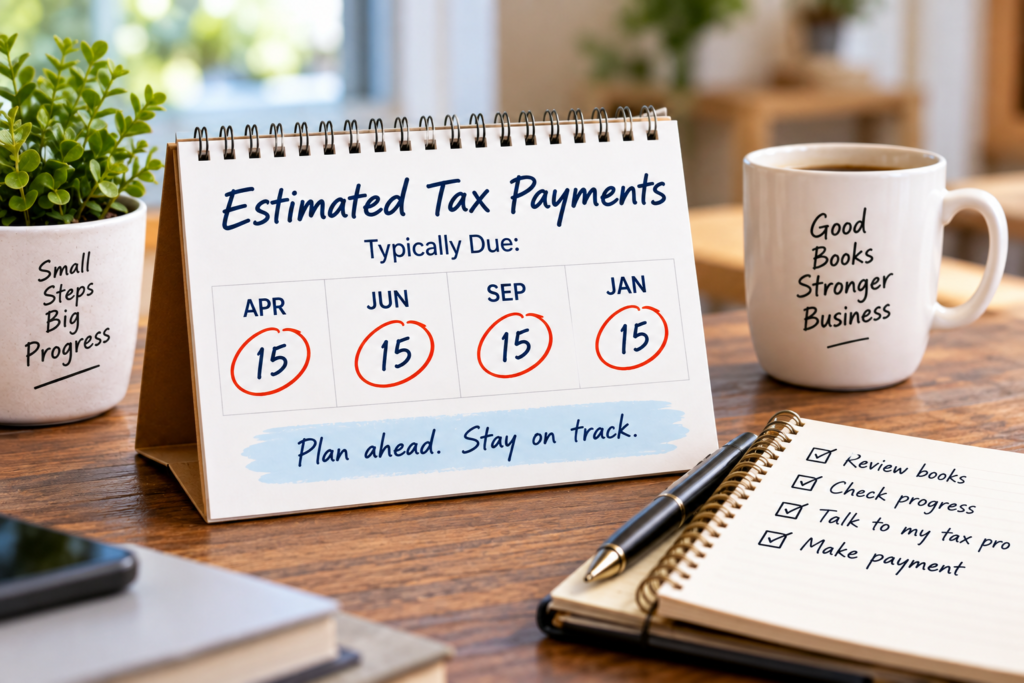
For individuals, estimated federal tax payments are generally associated with four payment periods, with payments typically due around:
- April 15
- June 15
- September 15
- January 15 of the following year
If a due date falls on a weekend or legal holiday, the deadline can shift to the next business day.
Always check the current IRS calendar or your tax professional for the deadlines that apply to the specific tax year you’re working with.
And remember that federal estimated taxes aren’t necessarily the whole story. State tax requirements may also apply.
How Much Should You Pay?
This is where bookkeeping walks onto the stage carrying a very important clipboard.
Your estimated tax calculation depends, in part, on knowing how much money the business is actually making.
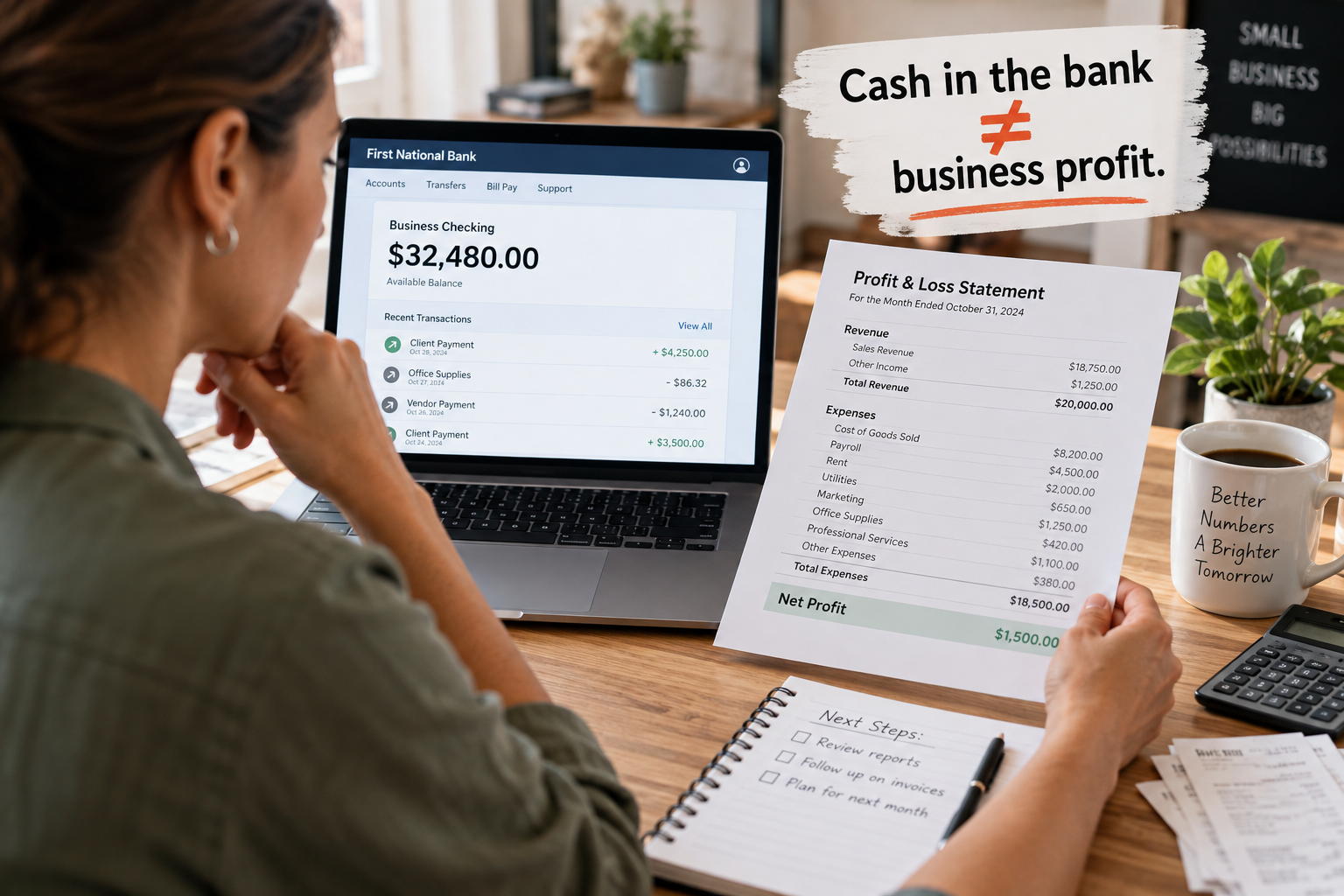
And that is not the same thing as looking at your bank balance.
Suppose your business has collected $80,000 so far this year.
That doesn’t necessarily mean you have $80,000 of taxable business profit.
Maybe you also had $45,000 of legitimate business expenses.
Your bookkeeping might therefore show something closer to:
Revenue: $80,000
Expenses: $45,000
Net profit: $35,000
Those are very different numbers.
Your tax professional needs reliable financial information to help determine how that business activity affects your tax situation.
If your books show $35,000 in profit when the real number is $55,000 because expenses were duplicated, that’s a problem.
If the books show $55,000 when the real number is $35,000 because legitimate expenses haven’t been recorded, that’s a problem too.
Your tax estimate is only as useful as the information feeding it.
What Are the Estimated-Tax Safe Harbor Rules?
The IRS has rules that can help taxpayers determine whether enough tax has been paid during the year to avoid an estimated-tax underpayment penalty.
For many individual taxpayers, the general federal rule is based on paying at least:
- 90% of the tax for the current year, or
- 100% of the tax shown on the previous year’s return,
whichever applicable test provides the required payment level.
A higher prior-year percentage generally applies to certain higher-income taxpayers. There are also special rules and exceptions for certain taxpayers and circumstances.
This is an area where your tax professional should be involved.
Your bookkeeper can help make sure the business records behind the calculation are organized and current. Your CPA, enrolled agent, or other qualified tax professional can determine how the tax rules apply to your specific situation.
Those are related jobs, but they aren’t the same job.
Why Bookkeeping Matters for Estimated Taxes
Imagine trying to estimate your business profit in September when your books were last reconciled in February.
You’ve got seven months of activity floating around somewhere between bank feeds, credit cards, receipts, invoices, payment processors, and that one receipt currently living in the cup holder of your truck.
That’s not much of a foundation for an estimate.
Good bookkeeping gives you something better: current financial information.
1. You Can See Your Actual Revenue
Money can enter a business from several sources.
Accurate bookkeeping helps make sure revenue is recorded correctly rather than relying on a quick glance at deposits in one bank account.
2. You Can See Your Expenses
Business expenses affect profitability.
If transactions haven’t been entered or have been categorized incorrectly, the profit showing on your reports may not reflect what actually happened.
3. You Can Monitor Profit Throughout the Year
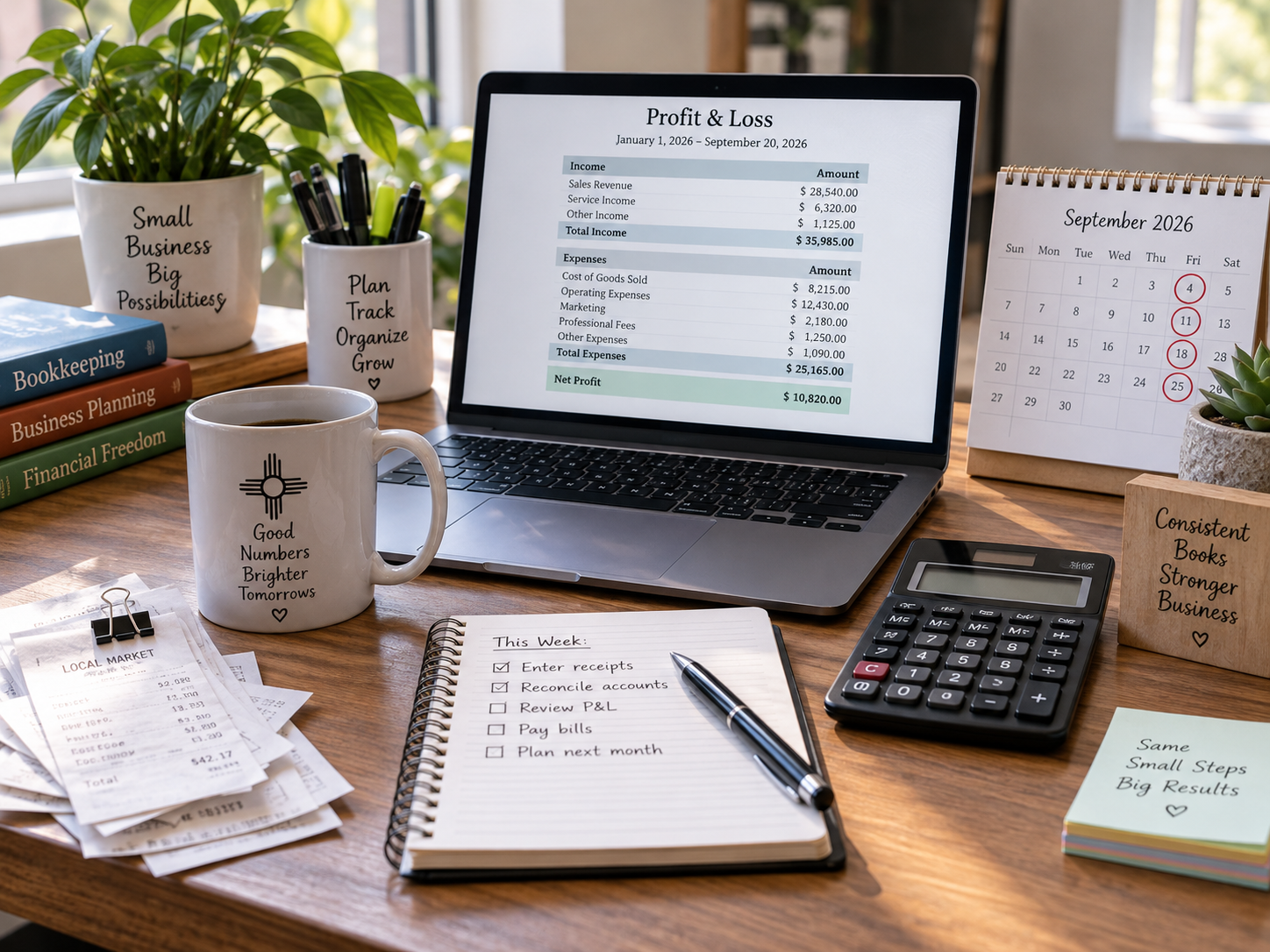
Your Profit & Loss statement shows revenue, expenses, and the resulting profit or loss over a particular period.
That gives you a much more useful starting point than:
“I think we’re doing pretty well.”
The IRS tends to prefer numbers.
4. You Can Catch Changes Before Year-End
Businesses don’t always earn money evenly throughout the year.
Maybe sales took off in the summer.
Maybe you landed a large contract.
Maybe expenses dropped substantially.
Maybe the first half of the year was slow and the second half wasn’t.
If your bookkeeping is current, those changes become visible while there’s still time to discuss them with your tax professional.
5. Your Tax Professional Gets Better Information
Your bookkeeper and tax professional perform different functions, but good bookkeeping can make the tax professional’s job considerably easier.
Instead of handing over a year’s worth of uncategorized transactions and hoping for archaeological miracles, you can provide organized financial records and reports.
That gives your tax professional better information to use when evaluating your tax situation.
What If Your Income Changes During the Year?
This is particularly important for small-business owners.
Maybe you expected $60,000 in annual profit when the year started.
Then business exploded.
By September, you’re heading toward $120,000.
An estimate based on your original expectations may no longer make sense.
The reverse can happen too. A slower-than-expected year can change the picture.
This is why estimated taxes shouldn’t necessarily be treated as a “calculate it once in January and forget about it” exercise.
Reviewing your financial reports throughout the year can help you spot meaningful changes in business performance and give you an opportunity to discuss those changes with your tax professional.
A Simple Quarterly Bookkeeping Routine
You don’t have to turn tax planning into a monthly festival of spreadsheets.
Start with the fundamentals.
Before discussing an estimated payment with your tax professional:
- Make sure your bank and credit-card accounts are reconciled.
- Review transactions that haven’t been categorized.
- Make sure business income has been recorded.
- Check that legitimate business expenses are included.
- Review accounts receivable and accounts payable when relevant to your accounting method and business.
- Review your Profit & Loss statement.
- Compare year-to-date performance with previous periods.
- Provide current financial information to your tax professional.
That last step matters.
Your bookkeeping tells you what happened in the business.
Your tax professional can then use that information, along with the rest of your personal and tax circumstances, to determine what estimated payment may be appropriate.
Don’t Confuse Cash in the Bank With Money Available to Spend
This may be one of the biggest adjustments for a new business owner.
A healthy bank balance feels good.
But the bank balance doesn’t tell you how much profit you’ve earned, what bills are coming due, what liabilities the business has, or what portion of the money may eventually be needed for taxes.
Your financial reports provide context that the bank balance can’t.
That’s one reason bookkeeping shouldn’t be something you think about only when tax season arrives.
Accurate books help you understand what the business is doing now.
And when estimated-tax time comes around, that’s exactly the information you want available.
The Bottom Line
Quarterly estimated taxes don’t apply exactly the same way to every small-business owner.
Your business structure, income, withholding, credits, prior-year taxes, and other circumstances can all affect whether you need to make payments and how much you may need to pay.
That’s a tax question to work through with a qualified tax professional.
But that professional still needs good information.
Keeping your books accurate and current gives you a clearer picture of revenue, expenses, and profitability throughout the year. That makes it much easier to have a useful conversation about estimated taxes before a deadline is staring at you from the calendar.
If you’re not confident that your bookkeeping is giving you an accurate picture of your business, Zia Bookkeepers Group offers a free bookkeeping audit.
We’ll take a second look at your books and help identify what may need attention, so you can have better financial information when it’s time to talk with your tax professional.
This article is for general educational purposes and is not tax or legal advice. Tax rules vary by taxpayer and can change. Consult a qualified tax professional regarding your specific circumstances.