

Should You Reinvest Profits or Keep More Cash in the Business?
Every profitable month brings the same fun little argument in your head. One voice says “buy the equipment, hire the person, run the ads, GROW.” The other voice says “what if next month is terrible and you need that money to make payroll.” Both voices are annoying. Both are also right sometimes.
I’ve flip flopped on this more times than I’d like to admit. Early on, I reinvested almost everything back into the business because I read somewhere that “cash sitting in the bank is cash not working for you.” Cool theory. Then a client paid me 45 days late, a software subscription auto-renewed for way more than expected, and I found myself doing mental math in the grocery store parking lot. Cash sitting in the bank might not be “working” but it sure is comforting when you need it.
So let’s talk about how to actually make this decision instead of just picking a side and hoping.
There's no universal right answer, and anyone who tells you otherwise is selling something
I’ll save you some time: there’s no magic percentage like “always reinvest 40% and save 60%.” Your industry, your growth stage, your risk tolerance, and how predictable your revenue is all change the math. A business with steady, recurring monthly revenue can afford to run leaner on cash than a business that lives and dies by a few big seasonal spikes.
What actually matters is asking better questions, not finding a one size fits all formula.
Start with your cash cushion, not your growth ideas
Before you spend a single dollar on growth, figure out your safety net. A common rule of thumb is 3 to 6 months of operating expenses sitting in reserve. If your industry is unpredictable (hello, seasonal businesses, freelancers, anyone dependent on a handful of big clients), lean toward 6 months or more.
Here’s the quips-from-experience part: I once had a boss who thought 6 months of reserves sounded excessive, like packing an umbrella for a trip to the desert. Then a major client cut their contract with little to no warning, and that “excessive” cushion covered payroll for two months while I looked for new business. Turns out reserves aren’t paranoia, they’re just planning for the boring, predictable fact that business is unpredictable.
Once your cushion is funded, you’re in a much better position to reinvest the rest without losing sleep.
Reinvest when the math is actually good, not just when it sounds exciting
New equipment, a bigger team, fancy ads, a rebrand… it’s easy to get excited about spending because growth feels productive. But excitement isn’t a financial strategy. Before reinvesting, ask:
- Will this directly increase revenue or cut costs, and by roughly how much?
- How long until it pays for itself?
- What happens to my cash position if this investment takes twice as long to pay off as expected (because it usually does)?
If you can’t answer these with at least a rough estimate, you’re not investing, you’re guessing with a nicer outfit on.
A quick real example: I once hired a “growth expert” who promised to double my leads. It cost a lot, delivered mediocre results, and taught me an expensive lesson about vetting ROI claims before writing a check. Lesson learned, wallet lighter.
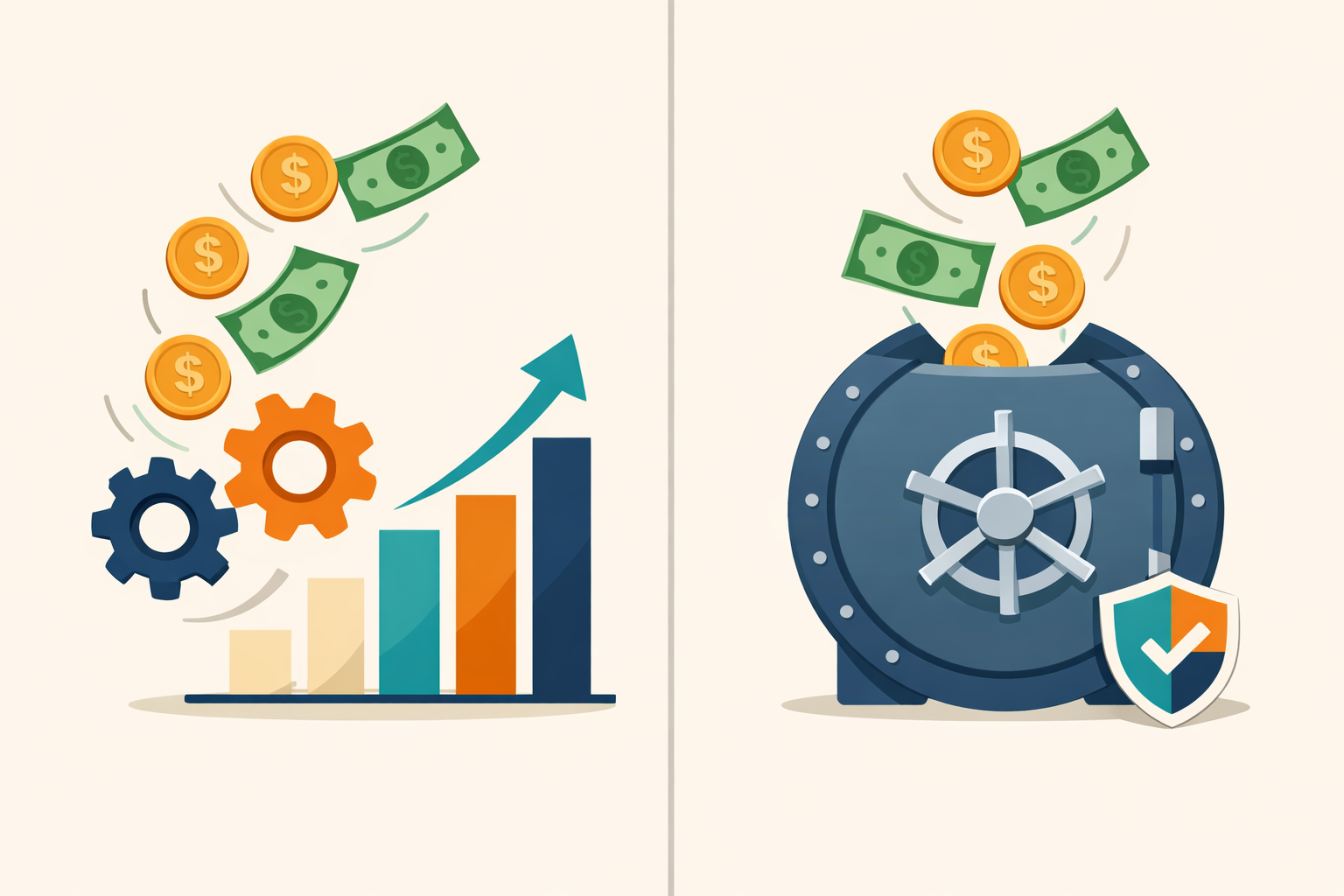
When to lean toward keeping more cash
Keep more cash on hand when:
- Your revenue is inconsistent or seasonal
- You’re in an industry facing uncertainty (economic shifts, supply chain issues, new regulations)
- You just took on debt or have big expenses coming up
- You genuinely don’t know what to invest in yet (don’t spend just to feel productive)
That last one matters more than people admit. Spending money just because profits are sitting there isn’t a strategy, it’s discomfort with having cash you haven’t “used” yet. Cash isn’t lazy. Cash is optionality.
When to lean toward reinvesting
Reinvest more aggressively when:
- You have a proven system that scales (an ad campaign with solid ROI, a sales process that converts predictably)
- Demand already exceeds what you can currently deliver
- You’ve got healthy reserves and the investment has a clear, reasonably short payback period
- Waiting will cost you more than acting (competitors moving in, a limited window of opportunity)
The businesses that grow fastest usually aren’t the ones spending the most. They’re the ones spending on the right things at the right time, with enough cash cushion that a slow month doesn’t turn into a crisis.
A simple gut check I still use
Before any big spend, I ask myself: “If this investment fails completely, can my business survive comfortably for the next 6 months?” If the answer is yes, I feel good about testing it. If the answer is a nervous laugh followed by silence, that’s my answer too.
Bottom Line
Building a healthy business isn’t about choosing team reinvest or team cash reserve forever. It’s about building a reserve first, then reinvesting with intention instead of impulse. Profit gives you choices. Your job is to make sure you’re choosing on purpose, not just reacting to whatever idea sounds good this week.